A surface to suit the workstation
A modular arrangement allows a work surface to be designed for a specific production space. Module connections and supports must be assessed for the selected setup.
One table. Endless possibilities for industrial use.
Large-format 3D printing needs room for the part and its preparation. Discover the possibilities of a modular steel platform in a robotic workstation.
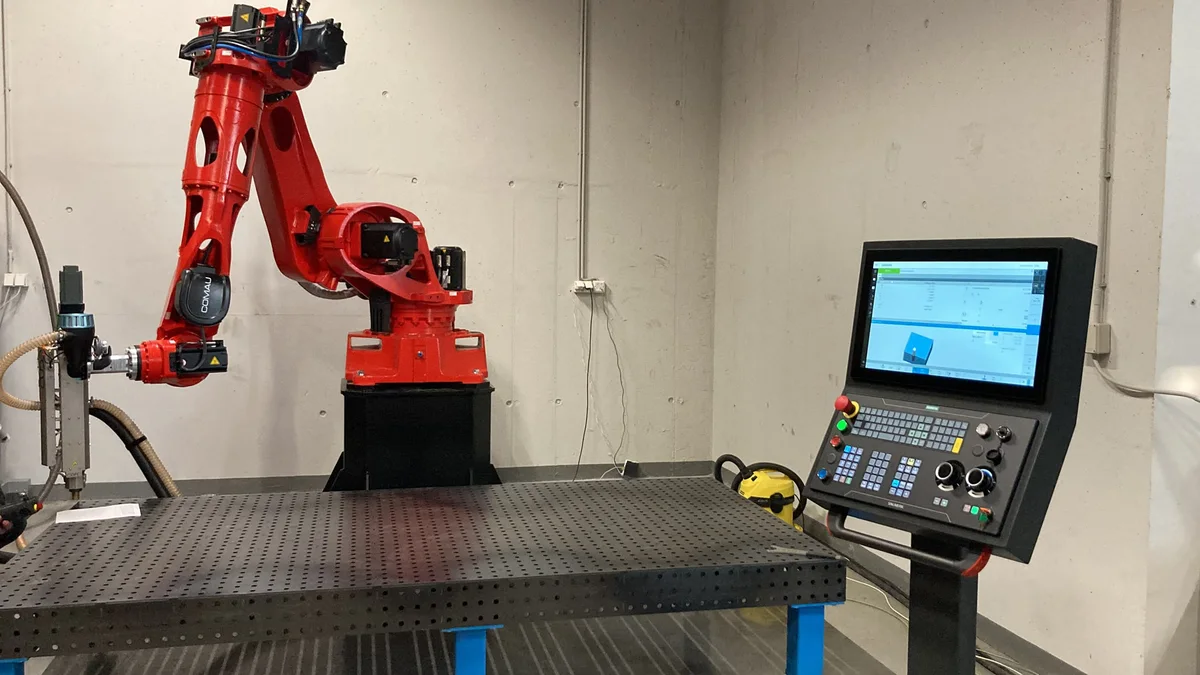
Welding tables for 3D printing extend the use of a perforated work surface to another industrial application. In robotic printing, a steel table can form the foundation for a build plate and for arranging support or clamping fixtures. The specific setup is based on part dimensions, the printing method and robot layout.
A modular arrangement allows a work surface to be designed for a specific production space. Module connections and supports must be assessed for the selected setup.
The perforated surface offers options for positioning compatible supports, stops and clamping elements. Their selection depends on the build plate, part and tool access.
The steel structure forms a work platform for a production application. Loading, anchoring and flatness requirements are verified for the specific design.
The photograph shows a robotic workstation labelled SinuCraft with an extensive work surface. It illustrates the spatial possibilities of modular industrial work tables in automated production.
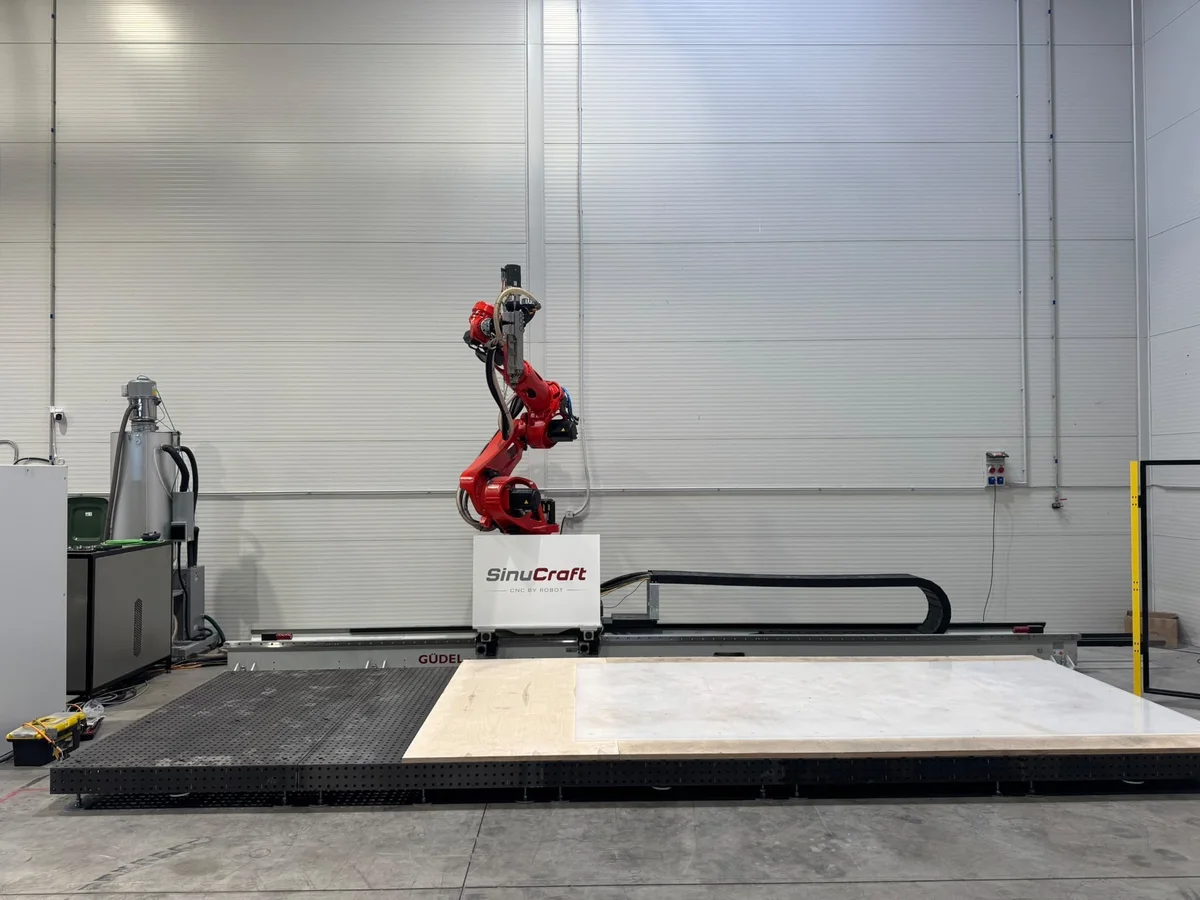
Robotic 3D printing deposits material progressively along a digitally prepared path. The work table forms part of the entire layout: its surface must accommodate robot reach, tool movement, supply lines and part handling.
For large-format printing, the build plate and its attachment are selected separately. Thermal conditions, required stability and equipment compatibility must be discussed with the workstation integrator. The same platform design principle can be applied in robotics, fixtures and production automation.
When choosing a modular welding table, start with the required surface area and fixture layout. The following pages present existing MAWELD tables; suitability of a specific product for robotic 3D printing is confirmed individually.
Send us the dimensions of the planned surface, the intended application and the integrator's requirements. Together we will review the possibilities of a MAWELD work platform.
Go to contact